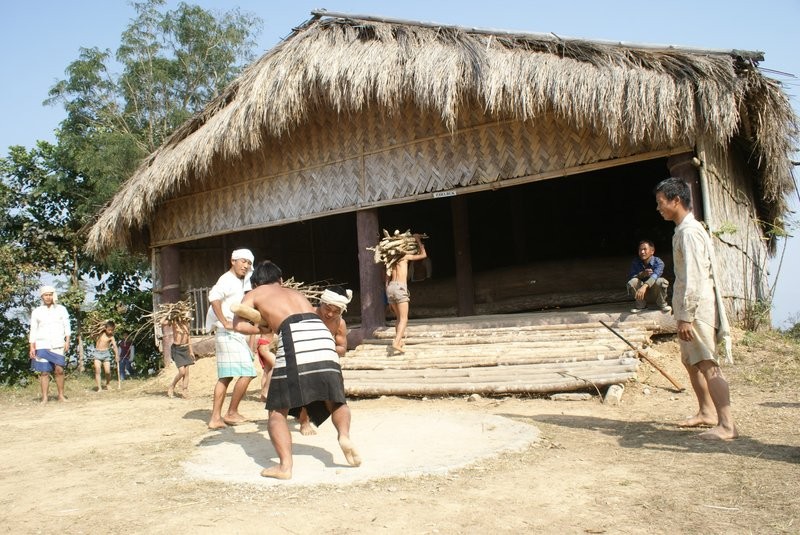
The zawlbuk was the young men’s house — a single large structure at the centre of every mizo village, framed in bamboo, walled in bamboo, roofed in thatch. Boys moved into it at adolescence and learned the things that couldn’t be taught in a home: how to stand watch, how to carry their share of a funeral, how to be useful to someone who wasn’t their own family.
When a village’s zawlbuk was well-kept, the village was well-kept. When it was dilapidated, so was everything else. The structure was the civic memory.
It is the material fact that matters here: the institutions of pre-colonial mizoram were bamboo institutions. Cultural transmission, civic defence, apprenticeship, communal meeting — all of it carried in a building that could be rebuilt from the ridge behind the village in a single season. The zawlbuk went because a colonial administration preferred its young men legible. The forest that grew it is still here.